

Most of us grow up believing that if water runs clear, it’s fine. Clear equals clean — simple as that. But as homeowners dig a little deeper, especially those using well water or living in agricultural regions, they sometimes discover that water can look perfectly normal and still carry things you’d rather not ignore.
That’s where the conversation shifts from simple filters to something more specific. Not dramatic. Not paranoid. Just informed.
In some cases, standard carbon filters or softeners don’t quite cover the issue. And that’s when specialty filtration becomes part of the picture.
Why One-Size-Fits-All Doesn’t Always Work
Water varies dramatically depending on geography. What works perfectly in one region might be completely irrelevant in another.
If your primary concern is chlorine taste, a carbon filter might be enough. If hardness is the issue, a softener does the job. But certain contaminants require targeted treatment — the kind designed specifically to remove one substance effectively.
That’s the role of specialty systems. They’re not overkill. They’re focused tools for focused problems.
And you won’t know if you need one unless you test your water first.
Arsenic: A Quiet Concern in Certain Regions
Arsenic isn’t something most people think about until it shows up in a water test report. It’s naturally occurring in some groundwater sources, particularly in parts of the United States and other regions with specific geological formations.
Because arsenic is colorless and tasteless, you won’t detect it without testing. And while municipal supplies are monitored and regulated, private wells place the responsibility squarely on the homeowner.
That’s where arsenic filtration systems come in. These systems often use specialized media designed to adsorb arsenic particles as water passes through.
There are two main types of arsenic — arsenic III and arsenic V — and effective treatment depends on knowing which form is present. Sometimes pre-oxidation is required before filtration works properly.
This is why guessing rarely works. A professional water analysis ensures the solution matches the specific form and concentration.
When addressed correctly, arsenic levels can be reduced significantly, offering real peace of mind.
Nitrates: The Agricultural Connection
If you live near farmland or areas with heavy fertilizer use, nitrates may appear in groundwater. Like arsenic, nitrates don’t change the taste, color, or smell of water.
But high nitrate levels can pose health risks, particularly for infants.
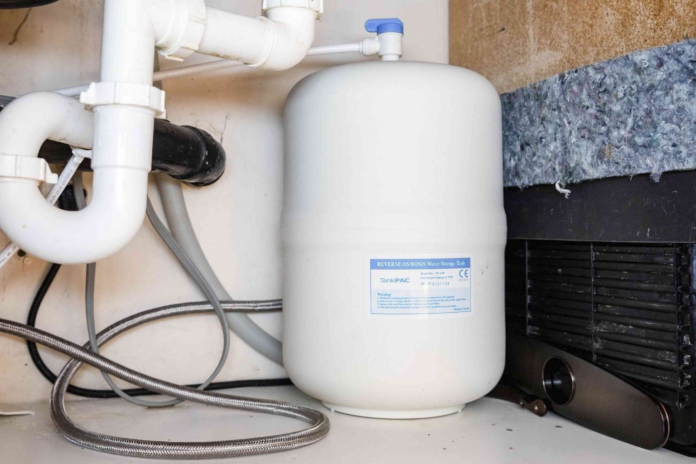
That’s why nitrate reduction systems are often recommended in agricultural regions or rural communities relying on well water. Reverse osmosis is one of the most common and effective methods for reducing nitrates in drinking water.
Unlike some contaminants that affect plumbing or taste, nitrates are primarily a health concern. So the focus is usually on point-of-use systems — under-sink filtration for drinking and cooking water.
Again, testing is the key step. Without it, you’re solving problems that may not exist — or missing ones that do.
The Emotional Side of Targeted Filtration
There’s something different about installing a specialty system.
It’s not about better-tasting coffee or softer laundry. It’s about addressing a specific issue revealed by real data. It’s about being proactive.
When you know what’s in your water — and you’ve chosen a system tailored to that information — you stop wondering.
That quiet confidence matters.
You fill a bottle for your child without hesitation. You cook without second-guessing. You offer guests a glass of water without thinking twice.
It’s not flashy. It’s foundational.
Maintenance and Monitoring
Specialty systems aren’t set-and-forget solutions. Media needs replacing. RO membranes wear out. Regular monitoring ensures performance stays consistent.
Fortunately, most modern systems are built with straightforward maintenance in mind. Service schedules are predictable. Replacement parts are accessible.
And compared to the alternative — ignoring a known contaminant — maintenance feels like a small price to pay.
Avoiding Overcomplication
One mistake homeowners sometimes make is installing multiple systems without clear guidance.
Not every home needs specialty treatment. If your water test shows no elevated arsenic, no nitrates, and no unusual contaminants, simpler filtration may suffice.
But if testing reveals specific concerns, targeted systems make sense.
Water treatment doesn’t need to be complicated. It just needs to be informed.
The Bigger Picture
Water flows through every part of daily life. It’s easy to overlook because it’s constant. But when you take the time to understand it — to test it, analyze it, and address any specific issues — you gain more than just cleaner water.
You gain control.
Specialty filtration isn’t about reacting to headlines or chasing trends. It’s about responding to your unique environment.
Start with testing. Interpret the results carefully. Consult professionals when needed. Choose systems designed specifically for what your water contains.
Because when the solution matches the problem, everything feels simpler.
And once it’s in place, you’ll likely stop thinking about it — which, when it comes to water, is exactly how it should be.