
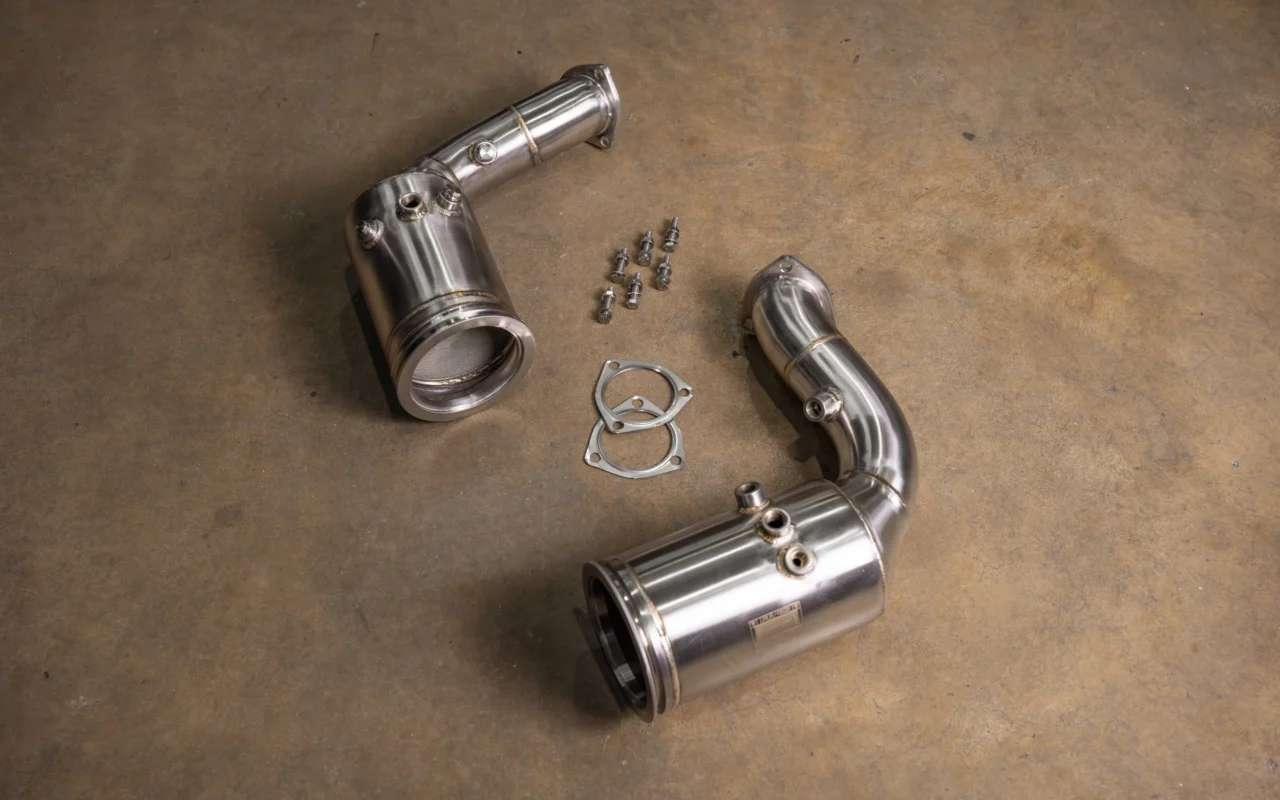
Performance vehicles have their own personalities. The Lamborghini Urus feels bold and powerful, the Mercedes-AMG G63 carries a character that few SUVs can match, and the Audi RS4 and RS5 offer a more understated blend of everyday usability and serious performance. Despite their differences, owners of these vehicles often share one interest: making the exhaust system feel more connected to the engine’s performance.
Downpipes are among the components enthusiasts consider when planning an exhaust upgrade. They can influence exhaust flow and sound, but choosing the right product takes more than comparing photographs or looking for the biggest advertised pipe diameter. Vehicle compatibility, material quality, emissions requirements, and professional installation all deserve attention.
Understanding the Role of Performance Downpipes
A downpipe connects the turbocharger’s exhaust outlet to the rest of the exhaust system. Exhaust gases pass through this section before travelling towards the remaining pipes and silencers. Its design can influence how gases move away from the turbocharger.
Factory components are engineered around several priorities, including emissions compliance, noise limits, durability, and daily driving comfort. Aftermarket downpipes may use different dimensions, bends, materials, and catalytic converter arrangements. These changes can affect the exhaust note and, depending on the complete setup, overall engine behaviour.
However, installing a new downpipe doesn’t automatically guarantee a major power increase. Results depend on the engine, turbocharger, exhaust configuration, software calibration, and other supporting components. A carefully engineered upgrade is generally a better choice than a product selected purely because it promises dramatic results.
Lamborghini Urus: Matching a Powerful SUV with the Right Exhaust Setup
The Lamborghini Urus brings supercar-inspired performance into an SUV format. Its combination of strong acceleration, distinctive styling, and everyday practicality makes it a popular choice among enthusiasts who want something unusual without sacrificing comfort.
When exploring lamborghini urus downpipes , begin with exact vehicle compatibility. Confirm the model year, engine specification, and existing exhaust configuration. Different production versions or regional specifications may have variations that affect fitment. A product designed for one application should never be assumed to fit another without confirmation.
Construction quality is particularly important in a high-performance SUV. Downpipes operate under substantial heat and vibration, so material selection, welding, flange accuracy, and mounting points all matter. Stainless steel is commonly used because it offers a useful combination of strength, heat resistance, and corrosion protection.
Sound is often a major motivation for an Urus owner. Some drivers prefer a deeper, more pronounced exhaust tone, while others want a more aggressive sound during acceleration without excessive cabin noise. The rest of the exhaust system plays a part in the final result, so it’s worth considering the complete setup rather than judging downpipes in isolation.
Mercedes G63 AMG W463A: Understanding Catted and Catless Options
The Mercedes-AMG G63 W463A has a character of its own. Its upright shape and familiar design give it a distinctive presence, while the AMG powertrain delivers the performance expected from a modern luxury SUV. Owners often look at exhaust upgrades to give the vehicle a sound that matches its appearance.
One important consideration is the difference between catalytic converter configurations. Researching mercedes g63 amg w463a catted and catless downpipes means understanding what each design involves and how it affects the vehicle.
Catted downpipes retain catalytic converter elements, although aftermarket versions may use different designs and specifications from factory components. Catless downpipes remove those catalytic elements from the modified section. This distinction has practical and legal consequences.
Catalytic converters help reduce harmful exhaust emissions. Removing required emissions equipment can make a vehicle illegal for public-road use, cause it to fail an emissions inspection, and trigger diagnostic warnings. A catted aftermarket system isn’t automatically road legal either; certification and local requirements must be checked.
Catless systems are generally associated with motorsport or off-road applications where their use is permitted. Before purchasing either configuration, consider where the G63 will be driven and whether the modification complies with applicable regulations. A louder exhaust may sound exciting, but legal and environmental responsibilities shouldn’t be ignored.
Audi RS4 and RS5: Performance Without Losing Everyday Comfort
The Audi RS4 and RS5 appeal to drivers who want strong performance in a package that can still handle ordinary routines. Whether it’s a daily commute, a weekend drive, or a longer motorway journey, these cars offer a balance that many owners don’t want to compromise.
Interest in audi rs4 rs5 downpipes often comes from the desire to change exhaust sound or explore a more performance-focused setup. The first step is identifying the exact model and engine configuration. RS4 and RS5 versions can differ by generation, body style, and market, so product compatibility should be confirmed rather than assumed.
Pay attention to pipe dimensions, connection points, sensor positions, and the supplied installation hardware. A component may look suitable but still require different brackets or connections. Asking the supplier for application-specific details can prevent unnecessary returns and workshop delays.
For these cars, sound quality is just as important as volume. An exhaust that produces a pleasant tone under acceleration but remains comfortable at cruising speed may be more satisfying than an excessively loud setup. Owners should also consider how the downpipes interact with the existing exhaust, including resonators and silencers.
Materials and Manufacturing: Small Details Make a Difference
Downpipes face demanding conditions. They experience high exhaust temperatures, vibration, pressure changes, and repeated heating and cooling cycles. Poor construction can eventually lead to leaks, loose connections, or premature wear.
Before buying, look for clear information about the material grade, wall thickness, weld quality, flange design, and finish. Smooth bends and accurate connections help with fitment. Proper mounting points also reduce unnecessary stress on the exhaust assembly.
Heat management deserves attention as well. The installer should check clearance around nearby components and ensure that any required heat shielding is correctly fitted. These details are easy to overlook when shopping online, but they can have a meaningful effect on reliability.
Installation and Engine Management
Modern performance vehicles use advanced engine management and emissions-monitoring systems. Changing exhaust components may affect sensor readings, diagnostic behaviour, and calibration requirements. That’s why professional installation is strongly recommended.
A workshop familiar with Lamborghini, Mercedes-AMG, or Audi RS platforms should inspect the vehicle before starting work. Correct gaskets, fasteners, sensor connections, and exhaust alignment are essential. After installation, the system should be checked for leaks, vibration, warning lights, and unusual noises.
Any calibration work should be handled by a qualified specialist who understands the specific engine. Avoid modifications designed to hide emissions faults or disable legally required monitoring systems. Engine safety and road compliance should remain priorities.
A Practical Checklist Before You Buy
A few straightforward checks can make the buying process easier:
- Fitment: Confirm the exact model, year, engine, and regional specification.
- Materials: Review the manufacturer’s information about steel grade and construction.
- Catalytic converters: Understand what the product retains or removes.
- Hardware: Check whether gaskets, clamps, and mounting parts are included.
- Installation: Ask whether specialist tools or additional work are required.
- Warranty: Read the terms for defects, returns, and fitment support.
- Regulations: Verify whether the system is permitted for the vehicle’s intended use.
Making the Right Choice for Long-Term Enjoyment
A good performance upgrade should suit the vehicle rather than simply attract attention. The Urus, G63 W463A, and Audi RS4 / RS5 have different engineering requirements and different driving personalities. Their exhaust systems should be approached accordingly.
Take time to compare specifications, speak with experienced installers, and think about how the vehicle is actually used. Sound, reliability, comfort, emissions compliance, and fitment all deserve a place in the decision.
Ultimately, the best downpipe setup is one that delivers the intended driving experience without creating avoidable compromises. Quality components and careful installation may not be the most exciting part of a modification, but they’re often what make the difference between an upgrade that lasts and one that becomes a headache.
