
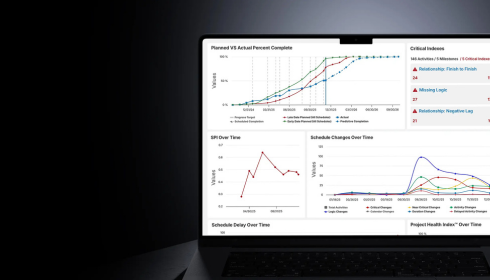

If you’ve ever wandered into a jobsite trailer at 7 a.m., you’ve probably seen it—the coffee that’s already losing heat, the stack of drawings that looks heavier than it should, and a schedule glowing on a monitor like a puzzle waiting for someone brave enough to touch it. Every construction schedule carries a kind of tension in its lines. You feel it even before the first delay hits or the first trade falls behind.
And that’s the thing about schedules: they’re not just documents. They’re living stories of the project—what’s going right, what’s drifting, what’s hiding beneath the surface. They reflect every decision, miscommunication, assumption, and unexpected twist that happens on a busy construction site.
But here’s the quiet truth: more teams are finally finding ways to make these schedules manageable. Understandable. Predictable. And honestly, a lot less stressful than they used to be.
Let’s talk about how that shift is happening—not with cold technical jargon, but in a way that feels real, relatable, and grounded in what construction teams face every day.
When Software Starts Feeling Like a Partner, Not a Taskmaster
For years, schedules were updated manually, reviewed manually, and interpreted manually, which sounds noble until you realize how much time evaporates just clicking through activities trying to uncover what changed. Old systems made schedule updates feel like a chore, something you “get through” rather than something that genuinely helps you manage the project.
But the new wave of construction schedule software is different.
It doesn’t try to boss you around or smother you with unnecessary complexity. Instead, it’s like an extra set of calm, steady hands—quietly checking logic, revealing slippages, catching out-of-sequence work, exposing drift you might miss on a hectic day.
Good software doesn’t eliminate human judgment; it enhances it.
It gives you a clearer picture so your decisions come from understanding, not guesswork.
In an industry built on precision, that clarity goes a long way.
The Problem No One Talks About: Change Is Constant
Even the best-laid plans can unravel the moment something unexpected happens—and on a jobsite, something unexpected happens pretty much daily. Maybe it rains. Maybe a supplier calls saying the delivery will be late. Maybe the electrician discovers a surprise in the walls and needs three extra days.
These aren’t “mistakes.” They’re construction.
But when changes are constant, teams need a way to understand those changes quickly and accurately. And that’s where modern schedule analysis tools come in. They turn schedule updates from something reactive into something insightful.
Instead of simply showing that activities shifted, these tools highlight why, how far, and what the ripple effect looks like. They make patterns visible. They show relationships you’d never catch manually. They help you see which delays are harmless and which ones could snowball into real problems if left alone.
For many teams, these tools feel like stepping into the sunlight after years of working in a dimly lit room.
When Smart Planning Feels Less Like a Buzzword and More Like a Lifeline
There’s a lot of talk in the industry about smart management, but the best examples of it aren’t about trendy technology or shiny dashboards. Smart management happens in the subtle places:
– when a superintendent understands risks before they hit the field,
– when a PM can see slippage early enough to actually respond,
– when the owner gets transparency instead of ambiguity,
– when the team spends more time solving problems than digging for information.
Smart management feels like control—not rigid control, but practical, realistic control.
The kind of control that makes meetings shorter, decisions smoother, and stress… a little more tolerable.
And as schedules get more complex, smart management isn’t a luxury anymore. It’s the difference between projects that survive and projects that struggle.
The Human Challenge Behind Scheduling
For all the technology surrounding construction, it’s still an incredibly human industry. Crews depend on relationships, communication styles, trust, experience, intuition. No software, no matter how powerful, can replace that.
But software can support it.
A scheduler who’s drowning in updates now has room to think strategically.
A superintendent doesn’t have to guess whether a delay is critical.
A PM doesn’t need to manually trace every logic tie.
An executive doesn’t have to wait until the end of the month to understand project health.
Instead of people bending over backward trying to keep up with schedule chaos, technology finally bends to fit the way people work.
This shift isn’t about becoming “more digital.” It’s about becoming more human.
Understanding the Ripple vs. the Wave
Construction schedules often feel overwhelming not because of one big problem, but because dozens of tiny issues combine to form a wave that no one saw coming. A day lost here, a miscommunication there, an inspection delayed, materials arriving slower than promised—individually they seem like annoyances, but collectively they can derail an entire phase.
Modern schedule tools help teams distinguish between what’s urgent and what’s just noise.
A small delay might not matter.
A similar delay in the wrong activity might be catastrophic.
A logic change could save time.
Or it could break the entire plan.
The ability to see those nuances before they turn into crises is one of the biggest advantages of these new tools. It’s not about being perfect; it’s about being aware.
Why Communication Suddenly Feels Easier
When everyone has access to the same clear schedule, disagreements shrink. Misunderstandings disappear. Updates turn into conversations rather than confrontations.
Owners trust more.
GCs stress less.
Subs plan better.
Executives get the truth, not the sugarcoated version.
Teams collaborate instead of competing for the “right” version of the schedule.
This transparency is one of the most powerful shifts happening across the industry—one that reduces tension, speeds up decision-making, and strengthens relationships.
Because at the end of the day, construction isn’t about software. It’s about people working better together.
A Future That Feels Less Chaotic and More Controlled
Construction will always have unknowns. Weather will shift. Materials will arrive late. Crews will get pulled to another job. Designs will change midstream. That’s part of the challenge—and part of the excitement.