There’s something reassuring about filling a glass straight from your kitchen tap and knowing the water tastes clean and fresh. But not every home’s water has that experience. Depending on the source, you may notice an odd taste, unpleasant odor, excess minerals, or other water-quality concerns.
That’s where reverse osmosis comes into the conversation. It has become a popular choice for homeowners who want an extra level of treatment for drinking and cooking water. Still, reverse osmosis isn’t a magic solution for every water problem. Understanding how it works—and what it actually does—can help you decide whether it’s right for your home.
What Is Reverse Osmosis?
Reverse osmosis is a water-treatment process that uses pressure to move water through a specialized semipermeable membrane. The membrane allows water molecules to pass while reducing many dissolved substances and impurities.
In simple terms, imagine a very fine barrier that separates treated water from substances you don’t necessarily want in your drinking water.
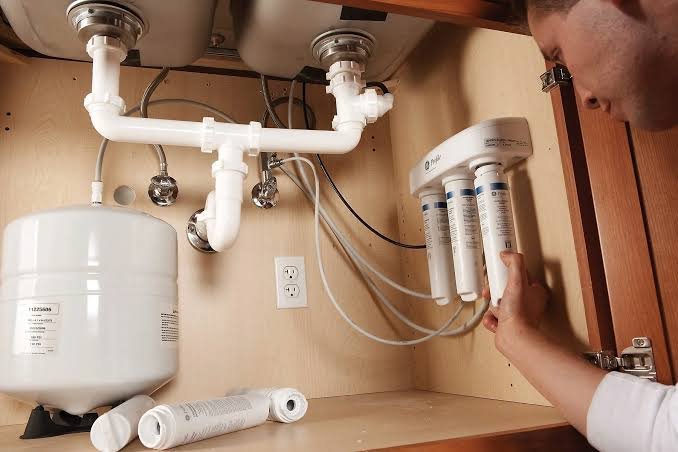
Modern reverse osmosis purification systems often use several stages rather than relying on the membrane alone. Depending on the design, pretreatment may help protect the membrane, while post-treatment can improve taste.
The exact results depend on the incoming water and the equipment being used, which is why testing the water beforehand is always a sensible idea.
Why People Choose Reverse Osmosis
Taste is one of the most noticeable reasons homeowners consider reverse osmosis. If your water has an unpleasant mineral, chemical, or otherwise unusual taste, properly designed treatment may make drinking water more appealing.
Reverse osmosis can also reduce various dissolved substances, depending on the membrane, system configuration, and water conditions.
For families that cook frequently, the difference can be noticeable in more than just a glass of water. Coffee, tea, soups, rice, and other foods are all made with water, so water quality can influence everyday meals too.
Of course, better taste is only one part of the picture.
How a Multi-Stage System Works
A typical residential reverse osmosis setup may contain multiple stages. The first stage often handles sediment, helping protect later components. Another stage may use activated carbon to reduce chlorine or improve taste.
Then comes the reverse osmosis membrane itself.
After that, some systems include additional filtration or polishing stages before water reaches the faucet. The exact configuration varies, so homeowners should look at what each stage is designed to accomplish rather than assuming that more stages automatically mean better treatment.
The right system is the one that addresses your specific water-quality needs.
Taking a Closer Look at ERO 375
Homeowners researching reverse osmosis products may encounter models such as ERO 375 while comparing drinking water solutions.
When evaluating a specific model, don’t focus only on the name or the number of stages. Look at practical details such as production capacity, storage, filtration stages, replacement filter costs, installation requirements, and maintenance.
It’s also worth checking whether the system has certifications relevant to the performance claims being made.
A good water treatment purchase isn’t just about choosing a recognizable model. It’s about making sure the equipment is suitable for your water and household usage.
What Is a Reverse Osmosis Water Purifier?
A reverse osmosis water purifier is essentially a drinking-water treatment system built around reverse osmosis technology. These systems are commonly installed at a kitchen sink or another point where treated water is needed.
They’re particularly useful when homeowners want highly treated water for drinking and food preparation without treating every gallon used for showers, laundry, and cleaning.
This point-of-use approach can be practical because you concentrate the treatment where it matters most.
Does Reverse Osmosis Remove Everything?
This is a common misconception.
Reverse osmosis can reduce many dissolved substances, but no treatment system should be described as removing absolutely everything under every condition.
Performance depends on membrane quality, water pressure, temperature, maintenance, and the characteristics of the incoming water.
That’s why manufacturers provide performance specifications, and why water testing can be so useful. If you have a specific contaminant concern, look for a system that has been appropriately tested or certified for that particular reduction claim.
What About Water Waste?
Traditional reverse osmosis systems can produce some wastewater as part of the filtration process. The exact amount varies depending on system design, water pressure, membrane condition, and efficiency.
Newer systems may be designed to improve water efficiency, so it’s worth comparing specifications if conservation is important to you.
Don’t simply assume that one reverse osmosis system performs the same as another. Ask about recovery rates and wastewater generation before making a purchase.
Maintenance Is Not Optional
Like any household filtration equipment, reverse osmosis systems require regular maintenance.
Pre-filters and post-filters need replacement according to their recommended schedules. The membrane also has a service life and may eventually require replacement.
Neglecting these tasks can affect water quality and system performance.
Fortunately, maintenance is usually manageable when you keep track of replacement dates. Set a reminder on your phone or calendar. It takes almost no effort and can prevent the system from quietly declining in performance.
Is Reverse Osmosis Right for Your Home?
The answer depends on your water.
If your main concern is hard water throughout the house, a water softener may be more appropriate for that particular issue. If your drinking water has a specific taste, odor, or dissolved contaminant concern, reverse osmosis could be worth exploring.
Testing is the best place to begin.
Once you understand your water, compare systems based on actual performance, maintenance, cost, installation, and certification rather than choosing based purely on advertising.
A Clearer Way to Choose Drinking Water Treatment
Reverse osmosis can be a powerful tool for improving drinking water, but the best results come from choosing the technology thoughtfully.
Understand your water first. Learn what the system is designed to reduce. Check replacement costs and maintenance requirements. Ask questions about efficiency and installation.
You don’t need the most complicated system on the market. You need one that fits your home’s water and your everyday routine.
In the end, good water treatment is about confidence. When you know what your system is doing and why you chose it, pouring that next glass of water feels a whole lot simpler.